Research project
Controllable Adhesion in Extreme Environments & Honeybee Footpad Interface Mechanics
Project lead
Funding: National Natural Science Foundation of China (No. 5237052667) and Beijing Nova Program (No. 20240484712)
Overview
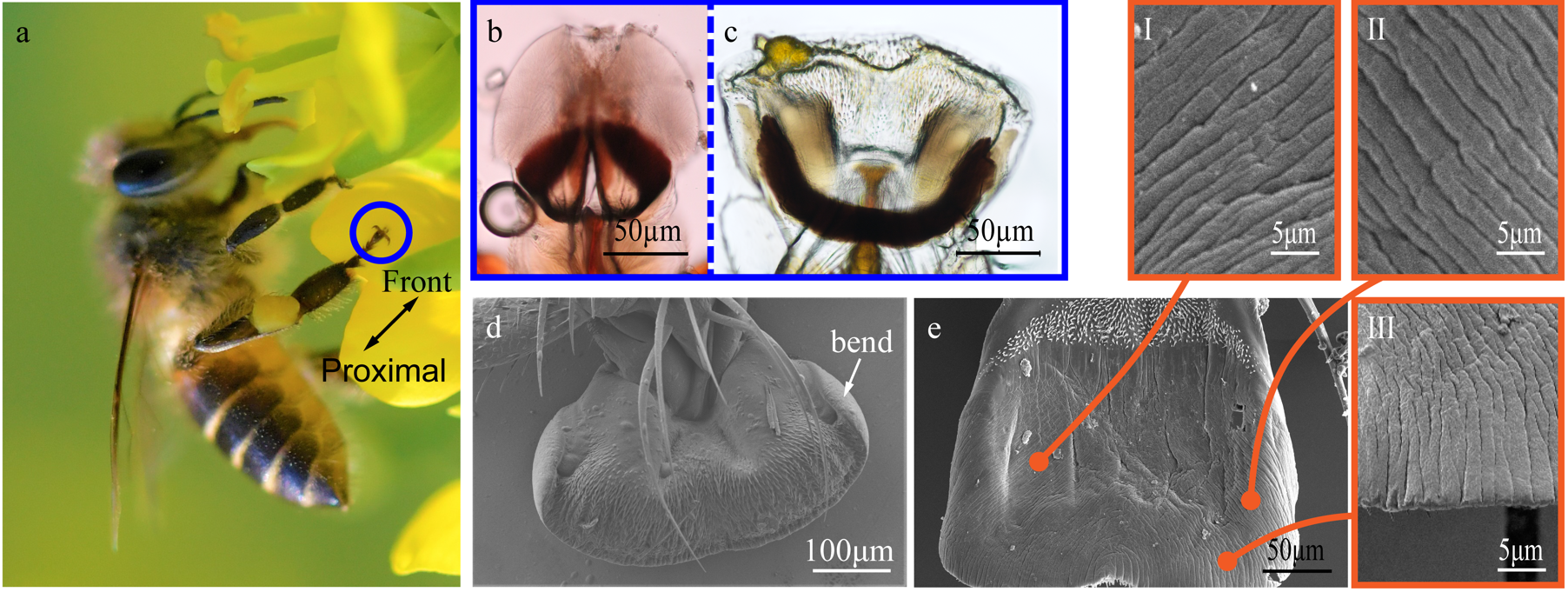
How can the coupling of tarsal structures, secretions and motion support strong attachment, dexterous grasping and controlled release?
My Work
Mechanisms and architecture
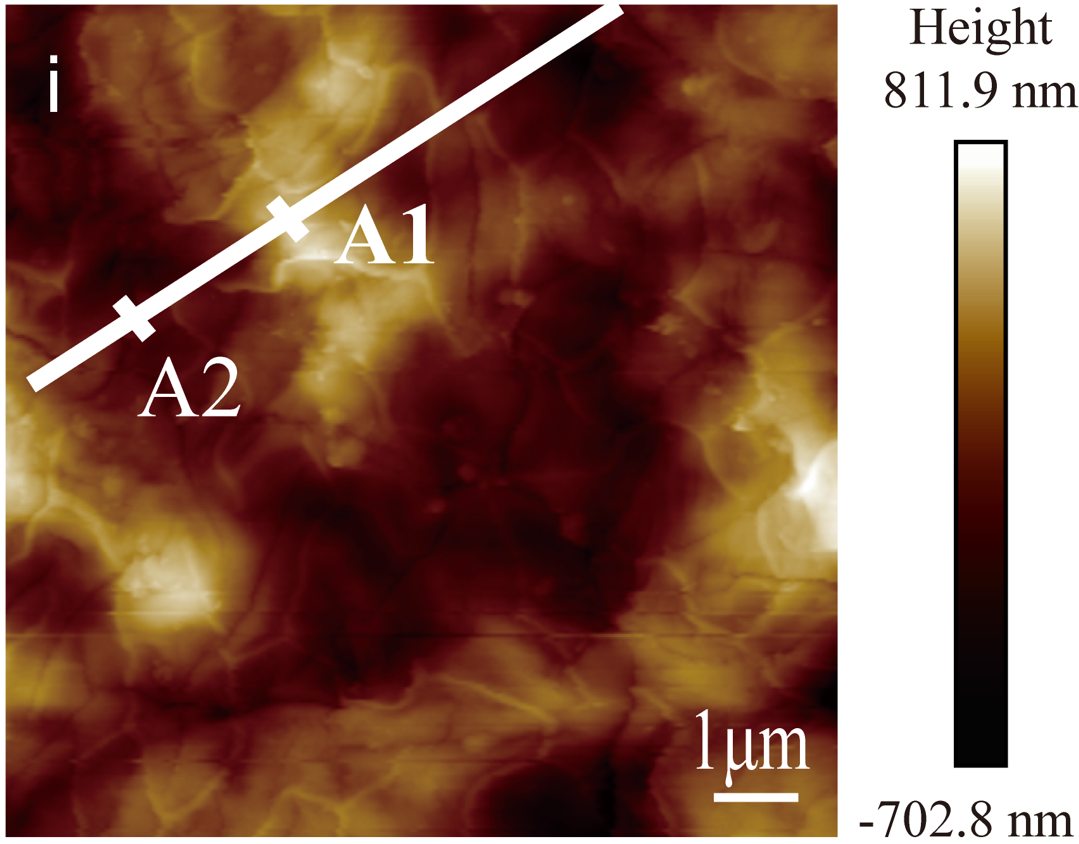
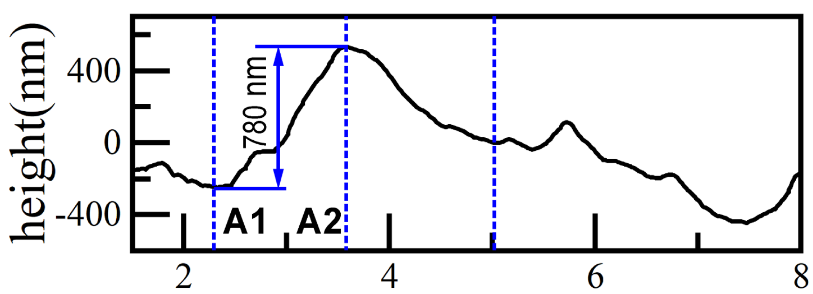
Lead literature review, experiments and structural design. Use cryo-SEM, AFM and high-speed kinematic analysis to investigate the synergy between tarsal microstructures, secretions and motion. Develop a mechano-chemical adhesion model and rigid-flexible coupling principles for reversible adhesive surfaces, soft grippers and extravehicular attachment devices.
Dexterous attachment
Design coupled rigid-flexible end effectors for irregular curved surfaces and non-cooperative targets. Translate multiscale tarsal contact, directional adhesion and active detachment into bioinspired fingertip units for compliant contact, load-bearing attachment and sequential low-force release.
Validation and translation
Complete rigid-flexible coupling and extreme-environment tests. Develop highly permeable adhesive patches for low-noise ECG/EMG monitoring, with results published in Advanced Science and related journals.
Footpad structure and wet contact
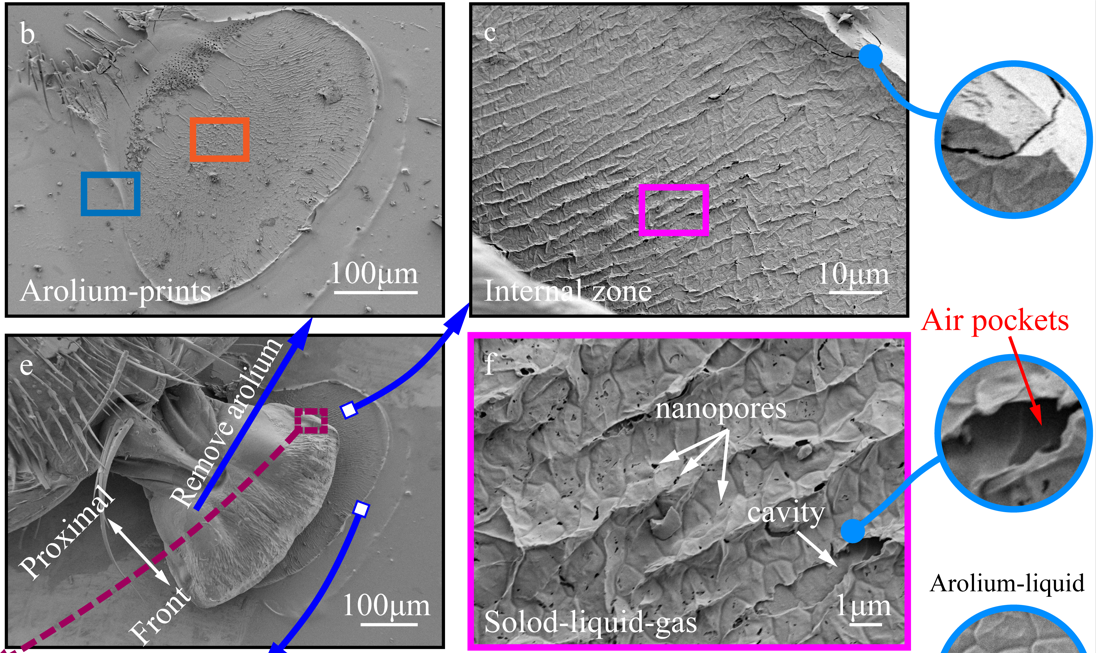
Microscopy connects the pad's hierarchical structure with its liquid-mediated contact interface.
Attachment and deformation
The experimental recording shows the footpad during contact. It accompanies the study of deformation and reversible attachment.
Interface chemistry
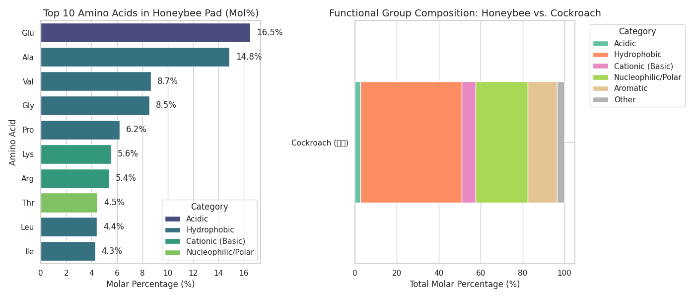
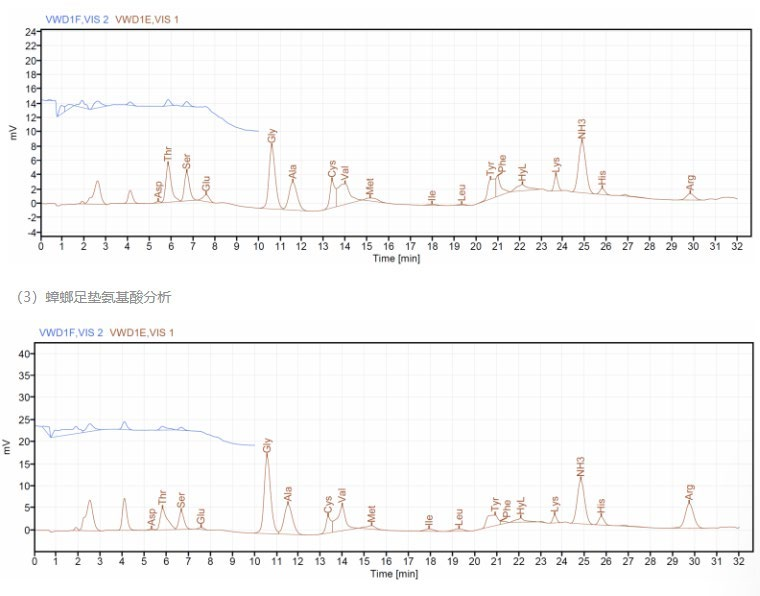
The presentation brings compositional analysis into the study of coupled mechanical and chemical adhesion.
Results
Prototypes maintained ≥10 kPa adhesion under ±100 °C thermal cycling and ≥5 kPa after a single dose of gamma irradiation.